Showing posts with label winter. Show all posts

Tuesday, October 23, 2018

roasting marshmallow on campfire

Campfire & Marshmallows — a Match made in Heaven

When people think about camping in the winters so eventually people picture those warming bonfires and those gatherings and stories told around camp fire and most important of all those marshmallows roasting by the heat of the fire.
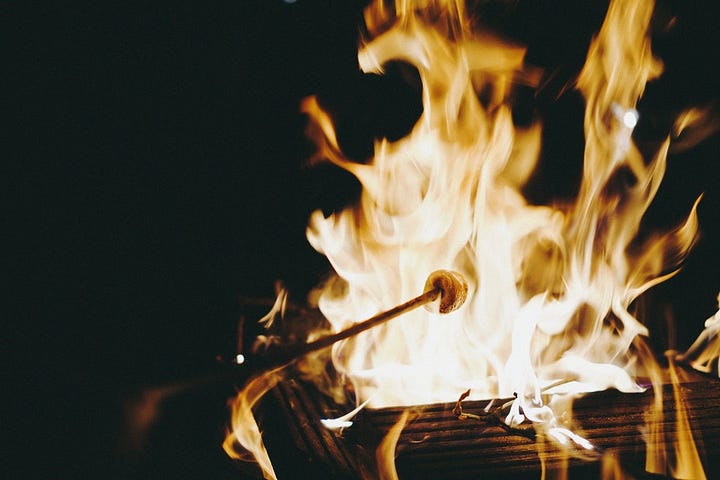
These are off course memories that stay alive in your head for a lifetime. Marshmallows are the most fun part of a bonfire wherever it is set at a beach or in the woods. So to make the process of easier there are some tips and tricks that will help make it easier and tastier.
First of all, the things on the list that we need to to know is how to set up fire ? A pile of grass, dryer lint, paper, char cloth. Small twigs to use as kindling. Build it gradually outward and upward from small to large, leaving plenty of free space for air. Gradually add branches as soon as it has caught fire.
Secondly, choosing the right the stick for roasting and also the way of that you would be inserting the to roast the marshmallow as there are some sticks that don’t melt from heat or even break .You are also recommended to insert the whole stick inside to prevent slipping of the marshmallow. But eventually stacking one by one and roasting them one by one is always recommended.
Once the tree branches start becomes ashes and getting less you will disappear then the red coals will start glowing. By then the place just above the fire is the right place to roast your marshmallow. Start handling the stick in which you inserted the marshmallow above that fire and start rotating it rotate the stick as you go so the heat toasts the marshmallow equally on every side.
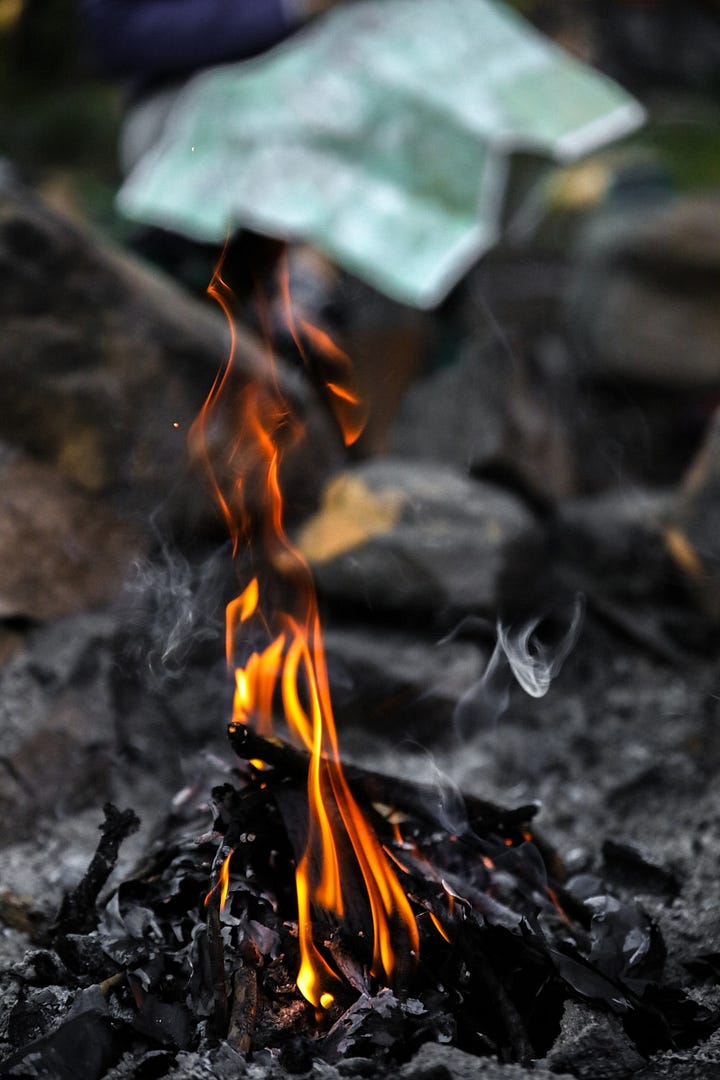
You’ll see the outer surface turn brown as it cooks. You can either keep up a steady rotation until the marshmallow is light brown all over, or cook one side until it’s done, then start rotating again but from another side, The heat coming off from this coal oven will caramelize that sugar , and there are no gout of fire to ruin the majestic white.
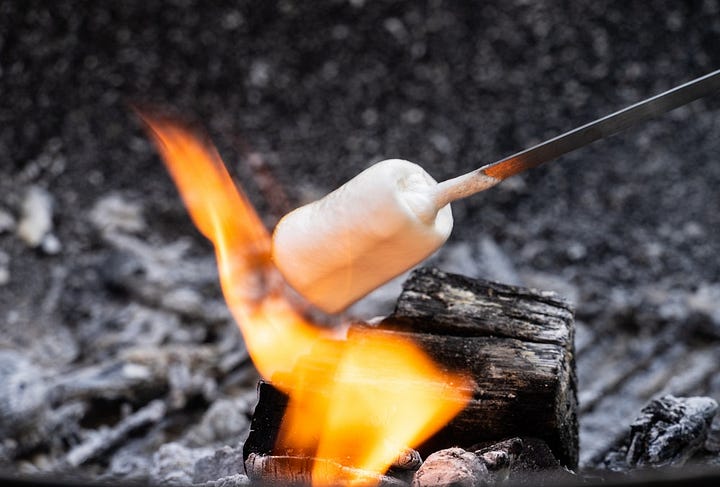
Precautions: If you aim for the perfect marshmallow toast try placing it over a blown out fire because placing it directly over the fire will might end up with a black coal as output. Also if the heat causes the marshmallow catch up fire then don’t violently just pull over the marshmallow to your side because if it interacts with interacts with your skin then it might cause some really serious burns that will really hurt. After pulling it out wait at least 30–70 seconds because they are extremely hot as soon as they are taken out.
They are so many different options you can try with Marshmallows in addition to roasting them while camping or setting up tent:
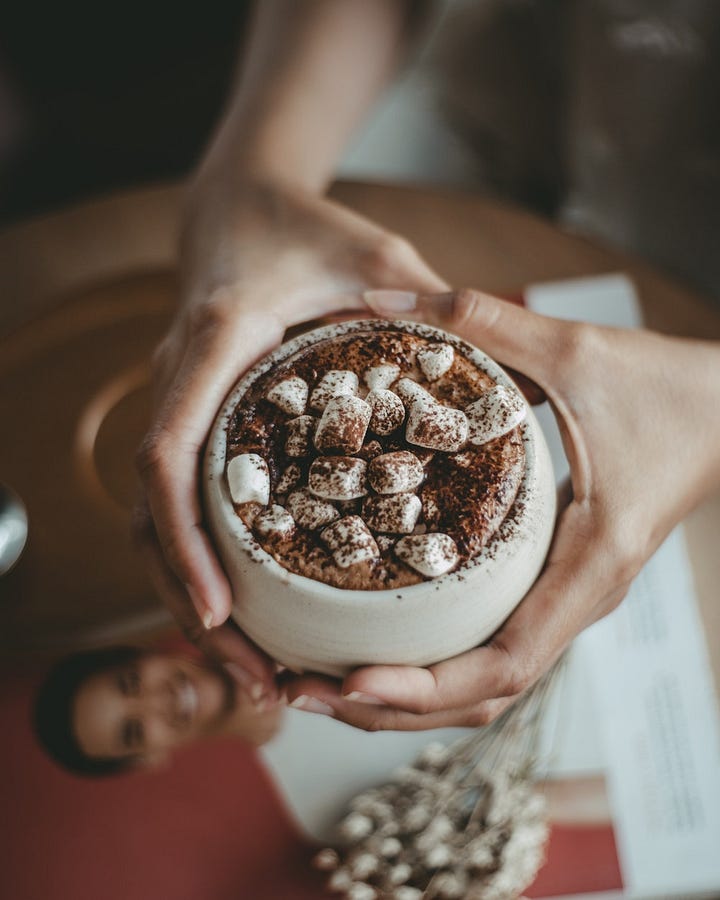
Roasted Marshmallow with Hot Chocolate is the perfect blend for a chilly night
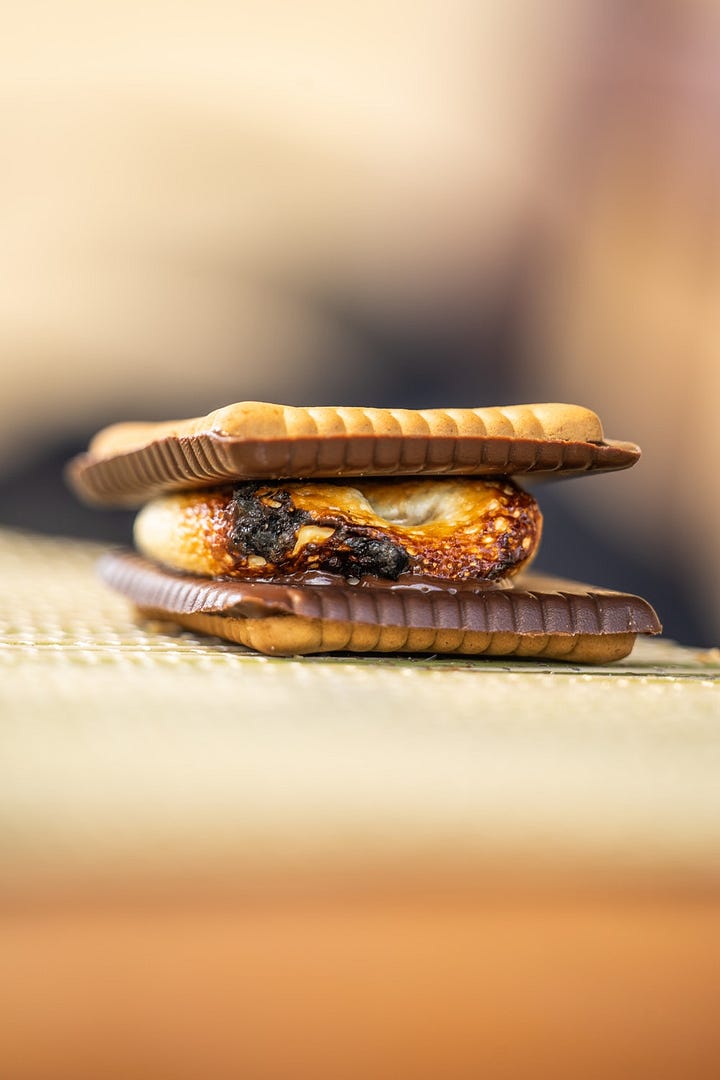
Nutella sandwich cookie with marshmallow sandwiched in between is also the crunchy gooey treat
Ooey, gooey and slightly singed, is there anything better than a sticky-sweet toasted marshmallow? Skewered and cooked over an open camp fire or sandwiched between chocolate and graham crackers to make s’mores, they’re basically the most decadent treat on Earth esp when you get to enjoy with family, partner or friend.
Which marshmallow treat do you usually enjoy the most? Comment below if you have used any of the above or if you have more interesting ideas. Cheers!!

Wednesday, October 3, 2018

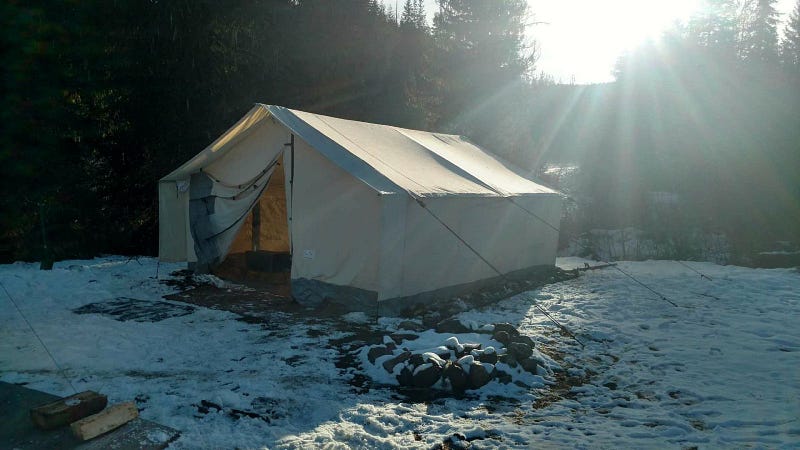
How to Manage a Breathable Canvas Tent

We have combined our accumulated experience and believe in the philosophy “truth is in the details” with innovation today in textile manufacturing to produce tents that exceed our customer’s expectation.


We use an Army Duck Cotton Canvas 10.10 Oz, 100% Cotton with a high-density weave structure. Our Canvas Tent fabric has UV, Anti-Mildew & Waterproofing agent saturated throughout the canvas before manufacturing so even after wear and tear it will still provide a waterproof barrier.
We achieve a high value of hydro-static water head creating a waterproof canvas that minimizes condensation build up. The canvas tents’ structure of cotton allows moisture to pass through and at the same time provide a barrier to water droplets.
We also offer a range of Flame Retardant finish meeting CPAI 84 USA Outdoor Camping Standard.
Understanding the Water Proof
Our canvas tents are manufactured from waterproof and water repellent fabrics. However, with the addition of seams, zips and other desirable features for camping, hunting, recreation, glamping tent cannot be as waterproof as a car, house or other solid structures.
Following are the common examples of how water can enter a camping/glamping tent. Hence, corrective actions and notes to consider are:
Condensation
When warm moist air meets cooler air, condensation of water gas into water liquid occurs. The tent walls and roof form an impermeable layer between the inside and outside climatic conditions. The moisture inside the tent condenses on the canvas fabric and water droplets are formed. Sometimes these water droplets build up to appear that the fabric is leaking when in fact the cause is condensation. Condensation can be reduced if the tent is well ventilated to reduce the buildup of warm moist air on the ceiling.
Zips
All care is taken in the canvas tents’ design to cover zips with storm flaps or position them where water will not flow. At times wind driven rain could force water under the flaps and through the zips. To minimize this, ensure all doors and windows are closed with flaps securely covering the zip wherever possible. If the ground is very wet or water pools under the floor, then the downward pressure of standing or kneeling on the floor can draw water through minute wear holes in the floor fabric or where there are joins in the floor fabric. To prevent this, do not set up the tent in hollows and make sure water drains away from the tent site.
Structural Integrity
A well set-up cotton canvas tent on level ground is structurally strong and most waterproof. During periods of prolonged rain and wind it may be necessary to tighten and adjust the frame, pegs and guy ropes as well as making sure any groundwater is flowing away from the campsite. A sagging roof or awning weakens the tent structure and could allow water to collect on the roof causing leakage, structural damage, and fabric tears.
Wet Tents
Water & Mildew Canvas Tent will definitely survive the test of nature in the great outdoors. However, there is a certain element of extra care a camper needs to undertake to ensure the tent performs over the years. Never pack a soiled or wet tent. Make sure the tent is dry and dusted prior to packing it back.
 Cotton tents, if packed in airtight bags will cause the microorganism to grow on it.
 Hence, the practice of ensuring the above mentioned key points is mandatory.